Product · six modules
What Copiara adds to Shopify B2B.
Shopify runs the catalog, the checkout, and the money. Copiara runs the wholesale work around it: the quote, the approval, the credit call, the part number nobody can find, and the answer a buyer wants before your counter opens.
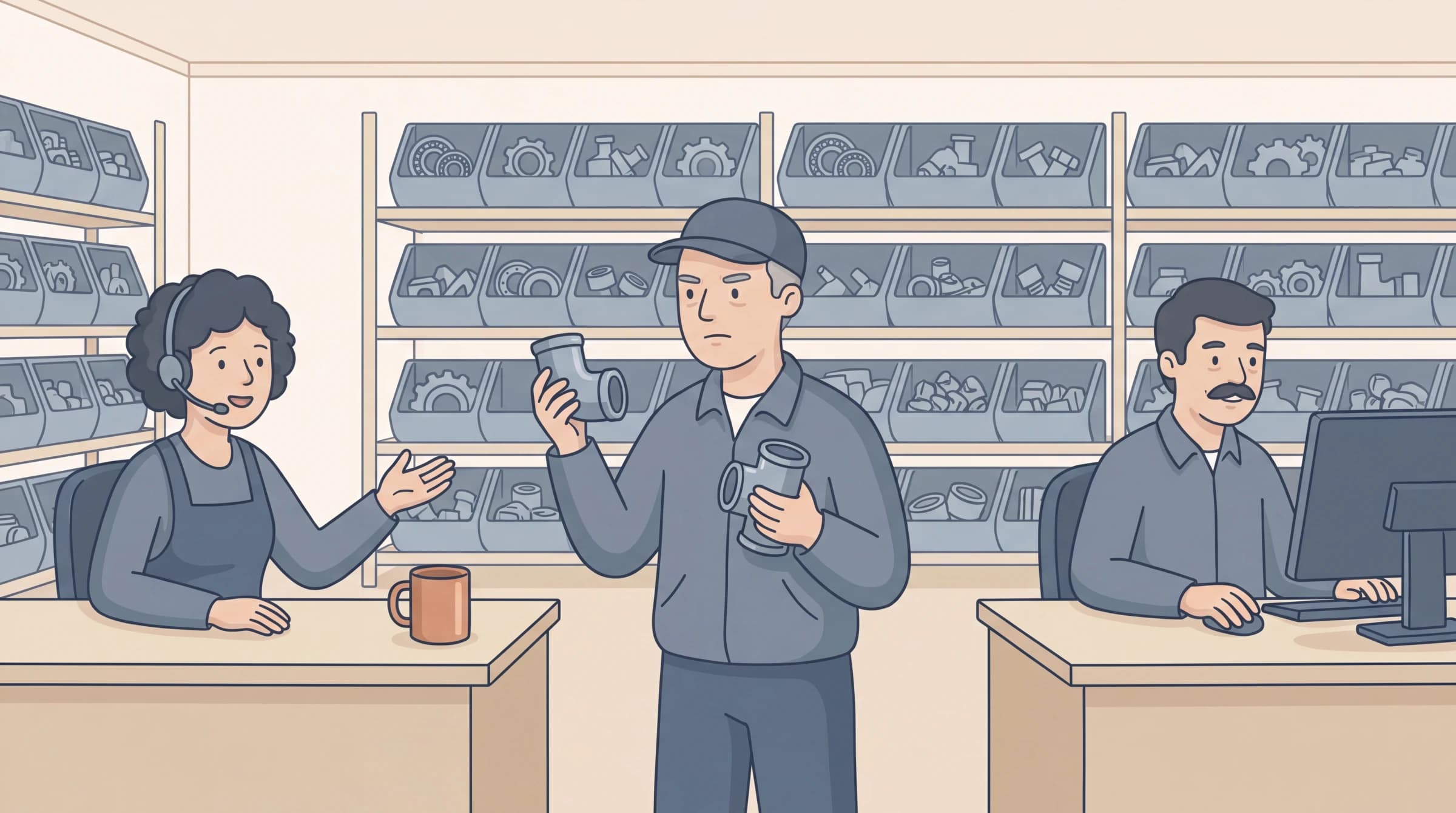
Where the work actually happens
None of this is a gap in your store. It is the part of wholesale that has always run on people, and it is the part nobody has given a system.
Quote record
Q-2026-0311
400 × CPR-6205-SL
- 01Buyer asked$7.40
- 02You countered$7.90
- 03Accepted$7.75
Margin floor $7.62 · held by the server, not by hand
→ pushed to Shopify as a draft order, prices locked
01 · Quoting desk
From RFQ to a draft order that holds its price.
Shopify has no quote negotiation on any plan. A wholesale price question becomes an email thread, and the thread becomes the record. Copiara gives the request, the rounds, and the acceptance one place to live.
- A buyer requests a price from your storefront instead of sending an email
- Negotiation rounds stay on one record, with every version kept
- A margin floor is enforced by the server, not calculated by hand
- An accepted quote becomes a Shopify draft order with the agreed prices locked
02 · Buyer approvals
The policy your buyer already has, finally visible to your store.
Every buying company has a spend policy whether or not your store knows about it. Shopify has no buyer-side approval step on any tier, so the policy runs on email and the audit trail is whatever someone remembered to keep.
Approval chain
PO-2026-0847
- Plant managerapproved
- Controllerwaiting
Held before Shopify checkout · the chain stays on the order
01
Spend limits per buyer
Set inside the buying company, so the rule travels with the person rather than with your rep's memory.
02
Chains that route themselves
Anything over a limit goes to the right approver, in order, without anyone forwarding anything.
03
A record, not an inbox
The chain is part of the order. When someone asks who approved it, the answer is on the order.
04
Cleared before checkout
Approval finishes before the order reaches Shopify checkout, not after the goods are on a truck.
03 · Credit and AR
The credit decision belongs at submission, not at collection.
Shopify payment terms let a company buy on Net 30 and mark the invoice overdue when it is late. They do not hold an order against a credit limit. That call is still yours, and for most distributors it lives in a spreadsheet.
Credit position
shared pool
87% of limit in use · warn, do not deny
This order $1,847.28 · fits · decided at submit
Limits that match how they buy
Credit per company, shared across branches or independent per location, because a group buys both ways.
Exposure, not just invoices
Live exposure counts approved but uninvoiced orders. An open invoice total is always the optimistic number.
Warn or deny at submission
An over-limit order becomes a decision at the moment of submit rather than a surprise at collection.
The buyer can see it too
Invoice and payment visibility, read back from Shopify, so the credit conversation starts with the same numbers.
04 · Cross-reference
Buyers hold the number they have, not the one you sell.
Shopify search matches your titles, SKUs, and tags. It has no concept of a competitor equivalent or a superseded part, so the lookup falls to whoever answers the phone, and it takes as long as it takes.

Resolve the number in hand
Competitor part numbers, legacy SKUs, and superseded numbers resolve to your own catalog item at the price that buyer has.
Keep the human in the loop
Fuzzy matches go to a review queue for your team. Nothing auto-maps without an exact reference, because a wrong bearing is a wrong shipment.
Carry the match forward
The reference stays attached through the quote, the order, and the reorder, so the buyer never translates it twice.
Paste a whole list
A quick order pad takes a pasted list or a CSV of the buyer's own numbers and resolves the lines together.

Catalog record
CPR-6205-SL
- Bore
- 25 mmsupplier feed
- Outside diameter
- 52 mmsupplier feed
- Seal type
- 2RSyour team
- Dynamic load rating
- not setmissing
- Cross-references
- 4 mappedreviewed
Readiness 86% · one field short of publishable
05 · Catalog enrichment
Every import should improve the record, not erase it.
Shopify is the system of record for your products and it stays that way. Copiara keeps the product knowledge Shopify has nowhere to put: the specifications, the provenance, and the history of what changed and who changed it.
- Attributes and specifications that make a part findable, layered over the Shopify product
- Provenance and field-level change history, so you know where a value came from
- Imports that enrich instead of blindly overwriting what is already right
- Readiness scoring, so you can see what is publishable and what still needs work
06 · AI concierge, and the line around all of it
Copiara does not rebuild your store.
Companies, payment terms, price lists, draft orders, and B2B checkout are Shopify's. Copiara configures them and hands the money path straight back. Your reps work in an embedded app inside the Shopify admin, your buyers stay on your own theme, and the concierge is an app embed there rather than a chatbot on someone else's domain.
Copiara is coming to the Shopify App Store. It is not listed yet.